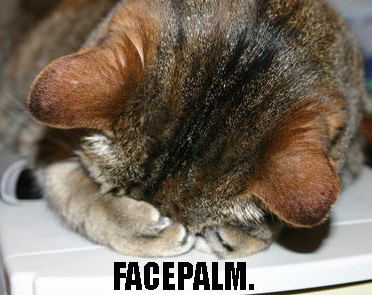
I've been looking forward to reading The Goldfinch ever since it came out. It sat, neglected, on my Kindle for months while I worked on my own book. I'm still working on that book, but I finally decided to dive into the book that won this year's Pulitzer Prize for literature.
As soon as I started reading, I realized I was going to have to start writing stuff down. Not because I was loving it, but because I was confused. That's the word that sums up my experience of this book so far: confusion.
I loved The Secret History. I haven't read The Little Friend. Those are the only other books Tartt has published, so there's not a heck of a lot of room for comparison. I immediately got sucked into the deep sense of mystery and foreboding in The Secret History. It opens with a murder, for heaven's sake. The Goldfinch doesn't. It's....difficult, and not in a good way. I'm still reading the book. But I started digging through reviews to see if other people were having the same WTF moments I'm having.
Let's take a look at some of those moments.
1. Problematic narrative voice. The narrator of The Goldfinch is a 13-year-old boy named Theo. Well, not really...it's actually an older Theo, looking back on his life from a hotel room in Amsterdam. We have no idea how old he actually is when he's telling the story. He says he is too afraid to "telephone" anyone in Amsterdam, which is not something anyone under 25 would say (probably under 35). This made me think he's an old man now, or at least a middle-aged one.
Well, that theory worked until the narrator threw in a reference to a Jet Li movie that came out in 2005. This was in a flashback, so the narrator could have been anywhere between, say, 10 and 13 when that incident occurred. This means the narrator is probably in his very early 20s. I've seen reviews that say he's 23 as well as 27...apparently I'm not the only one having this problem. The other alternative is that he's telling his story from the future, in 2020 or something, thus accounting for the older feel of the narrative voice.
Some readers won't care. They can just go with it. I can't. Why? Because this narrative voice is old. Antiquated, almost. The sentence structure and word choice are difficult to believe as the product of a 20-something mind, even one who was educated at a posh Upper East Side private school. So either there's a huge disconnect between the voice Tartt chose and the character she chose to embody that voice, or the book isn't supposed to be remotely realistic and we're just supposed to go with it and screw everything else.
Why does this bother me so much? Because the story starts when Theo is 13, but so few of his thoughts and impressions ring true as those of a 13-year-old boy. The vocabulary and style alone rule that out. The voice is also asexual, which I'm pretty sure isn't a defining characteristic of most 13-year-olds. It's constantly jarring to be reminded that Theo is 13, when the impressions, phrasing, and descriptions he provides are those of a middle-aged man.
Here are a few examples:
"...it was upsetting him so."
Do you know a 13-year-old boy who would talk like this? I don't.
"...a chill wind of unreason blew over me."
Again, do you know a 13-year-old boy who talks like this?
"Everything came alive in her company; she cast a charmed theatrical light."
Unless we're in a weird reverse Oedipal scenario, I'm not sure most 13-year-old boys would describe their mothers this way.
"His voice was very faint, very scratchy, very cordial, with a ghastly pulmonary whistle."
Do you know a 13-year-old who uses the words "ghastly" and "pulmonary" on a regular basis?
I'm instantly reminded of that moment in 10 Things I Hate about You where Michael drops a bit of Shakespearean dialogue ("Sweet love, renew thy force!") and Patrick says, "Hey man, don't say shit like that to me. People can hear you." Teenagers are the ultimate bullshit detectors for language.
That being the case, why did Tartt need the framing device at the beginning of the book? Why not let us experience Theo's adventures in real time, with the eyes and voice of a real 13-year-old? I'd care more about a boy's trauma if it weren't described in the dry, pontificating voice of some old guy. Plus, to me, it would mean more to show Theo progressing through the life events that help him arrive at the book's ultimate meaning (something about art being the only thing that lasts) than to start the book as Tartt does by telling us, "Hey guys, I'm old and jaded now, but there's a meaning to this story. In 700 pages, I'll tell you what it is. You're cool with that, right?"
Interestingly, the narrative voice is what the Washington Post's Corinna Lothar praised about the book. Here's what she had to say: "Permanently damaged and scarred by the explosion and the death of his mother, the voice of the traumatized youth and the cynical, self-involved adult is ingenuous and startling."
So far, I disagree. But I'm willing to keep going.
2. Clunky sentences. On a sentence-by-sentence level, I'm having problems. My inner editor wants to cut out words and phrases in nearly every other sentence. Tartt has a Pulitzer. Clearly, she knows an assload more than I do about how to write good fiction. Still...I'm actually cringing at some of these sentences. Here are just a few, all from Chapter 1, Section V:
"The boys muttered, audibly."
This made me stop. Does the word "muttering" mean that muttered words are generally inaudible, requiring the adverb to clarify that they were? If so, doesn't that mean "muttering" isn't the right word for what the boys are doing? On the other hand, if mutterings are generally audible, why add the redundant adverb? Something's not right here.
"I had made it over to where he was when--unexpectedly fast--he shot out his dust-whitened arm and grabbed my hand."
Wouldn't "suddenly" convey the same thing as the clunky "unexpectedly fast"? For that matter, why is clarification even needed? "Shot out" pretty much implies a sharp, quick action. This whole construction is a bit janky.
"For a moment I wasn't sure; I listened, hard; and then it spieled off again: faint and draggy, a little weird."
The semicolons. Make them stop. And if the narrator can come up with a verb like "spiel" to describe the motion of a sound, "a little weird" rings false. Either get rid of "spieled" or "a little weird." I'm not buying both of them in the same sentence.
"Often, in the afternoons, perfume-smelling women with shopping bags dropped by for coffee and tea..."
Hold up. The way this sentence is constructed, it sounds like the women are professional perfume smellers. If they smelled of perfume, it should have said "women smelling of perfume with shopping bags." I'm so confused. Why is a bad construction like this there? Is this some form of characterization? Or in a book that's more than 700 pages, did no one take the time to fix small things like this?
There are also an assload of -ly adverbs ("audibly," "unexpectedly," "fretfully," "thickly," limply," "awkwardly," "fearfully," etc.). Giving Tartt the benefit of the doubt, maybe these are meant to convey a lack of sophistication appropriate for a 13-year-old narrator. But then why does the overall tone still feel so old? Like I said, I'm confused.
3. Drag-ass scenes. This is a slow-moving book with zero narrative tension (yet). It's not a spoiler alert to tell you that there's an explosion at the Met that happens while Theo and his mother visit (this happens in the very first chapter). The aftermath of the explosion takes freakin' forever (at least 50 pages). Theo wanders and wanders and wanders and describes bodies and his perambulations through the wreckage like he's getting paid by the word (maybe that's what people mean by saying this novel is Dickensian?). Each time Theo clambers over another piece of wreckage or accidentally touches a body, the description is repetitive to the point of being sleep-inducing. You'd think a scene like this would be tense or fraught with peril. Nope. I understand that this is a literary novel, but so far, if this book were left behind in a time capsule, future generations would think literary novels and page-turners were mutually exclusive. That's a shame, since Tartt's own The Secret History proves that wrong.
4. Strange editing choices. This is nitpicking, I know, I know. This doesn't have an effect on the overall power of the story. It just makes me wonder about the production value when I see the phrase "middle-school kids" (note the hyphenated multi-word adjective) and "non working phone" (note the non-hyphenated multi-word adjective) in the same chapter. This is the curse of being a writer and an editor and a reader. I can't turn off other parts of me when it's time to read for fun. If I saw this in one of my books, I'd fix it. Similarly, internal dialogue is sometimes italicized, sometimes put in quotation marks, and sometimes not. I'm still confused.
5. General weirdness. After the explosion in the museum, Theo sees a dead woman and notes her fake tan. How does he know it's fake? Because she's dead and still has "a healthy apricot glow." Now, this made me stop and go, huh? How does a 13-year-old kid know whether freshly dead bodies (we're talking minutes) lose their natural tan? Do they? Heck, I don't know. Maybe Theo's right and dead people instantly lose any natural tan they have. But that detail felt wrong. It pulled me out of the story and made me want to research what happens to dead people's tans. It made me think of all those episodes of CSI: Miami where they find dead girls on the beach (Were they still tan? Shit, why can't I remember?). I shouldn't be thinking these things. I should be thinking about Theo and wondering what happens to him next. Nope. Furthest thing from my mind.
Interestingly, there's a huge literary kerfuffle over this book and its literary worthiness. Apparently, you're either a big fan of the book's Dickensian reach and ability to touch the heart (Michiko Kakutani, Stephen King) or you think it's clunky, poorly written, and full of cliches (James Wood, Francine Prose, Lorin Stein). You can read more about that debate here, in a Vanity Fair article.
Personally, I don't give a shit about literary merit and whether the book is "serious" enough to deserve all its praise. All I care about is understanding why so many folks like it, and why I'm having such a hard time with it. I'll report back when I'm further through and give a final verdict.
They say modern writers need a "platform." I have plenty of these in the closet, but apparently they aren't the right kind.
Showing posts with label complaint department. Show all posts
Sunday, July 20, 2014
Sunday, December 15, 2013
Book Review: Inferno by Dan Brown
![]() |
| Inferno by Dan Brown. It's ablaze, all right, but with what? That's up for debate. |
------------------------------------------------
I'm not normally at a loss for words when it comes to talking about books. But Dan Brown's Inferno might have gotten the best of me.
I just can't think of anything to say.
It's a book.
It's not good.
Can we just call it a night?
No?
Damn it. I should have known you'd expect more of me, dear readers. Inferno is not a good book. It's also not hate-worthy in the manner of some of the other books I've blogged about here. It doesn't inspire vitriol. It doesn't inspire anything at all. Perhaps that's the whole problem.
![]() |
| Confession Bear says, "Don't be a book snob." |
Let me start by saying I loved The DaVinci Code. Yes, the insults hurled at the book by book snobs are probably mostly true. But applying literary fiction's criteria to Dan Brown is like cursing at an apple because it isn't round and orange and you can't remove the peel in one of those nifty spirals. If you didn't know that going in, you're either blind or humorless or both.
Being a page-turner is an accomplishment. Books that make you stay up late at night to find out what happens next are, by definition, good books. You have another option--going to sleep at a normal hour, like a sane person--but you choose the book. If you have another option but you choose the book, the book is doing something right. For me, The DaVinci Code was crack...or whichever potato chips have the slogan, "Bet you can't eat just one." I couldn't read just one page. I couldn't turn out the light.
TL;DR: It's a good fucking book.
Dante's Pique
Inferno is not a good fucking book. It's even worse than a bad book. It's a boring book.
It's like when you're in college and your professor is talking, and you try to listen, but he's off on a tangent about some facet of his grad school research that matters only to him. It's 2:15 in the afternoon and his voice drones on like that guy who says, "Bueller?" You listen for an hour, but your watch says it's only 2:18. You start fidgeting to try and not fall asleep. But that gets boring, too. And then you get a little angry. You're paying for this class, after all. By the time 3:00 actually rolls around, you're not glad to be alive. You're pissed at the professor (for wasting everyone's time) and the university (for throwing away the student evaluations that say how boring he is). You would rather have been in the library doing research for your Victorian Lit paper. At least you'd have checked something off your to-do list that way.
That's Inferno in a nutshell. This Twitter account would have been a better use of your time:
![]() |
10 Things I Hate about You +1, for a Grand Total of 11...Because I'm Feeling Bitchy that Way
When I started reading, I took notes on things I thought I'd blog about...but I stopped caring about 150 pages in. Then I started counting the number of times I fell asleep while reading it and got close to double digits. In order not to waste the time I spent making the list, here's a few of the things that ticked me off before page 150:
- Adverbs
- "Langdon battled the sedatives and awkwardly hoisted himself upright in his bed."
- Because when I've been shot in the head and wake up groggy with amnesia, it really needs to be specified that my first movement is an awkward one.
- Exclamation point
- "A ray of hope cut through Langdon's grogginess. 'That's good news! Maybe this person knows what happened to me!'"
- Because when I've been shot in the head and wake up groggy with amnesia, the first thing I do is make nothing but excited declarative statements.
- Statements of things that make no sense
- "Who are you!? he called out in silence."
- If only someone had invented a word that meant having words go through your head without speaking them. Someone get the call-out-in-silence tank on the phone and ask them about it.
- Repetition for no point whatsoever
- "...every operative on board sensed there was some kind of high-stakes operation going on. The stakes are inconceivably high, and Vayentha had better get it right this time."
- I don't know about you, but I never believe the stakes are high unless I'm told twice in rapid succession using a variety of typefaces.
- Way too many uses of "?!"
- "I beg your pardon!?"
- Using this redundant form of punctuation makes it look like Brown doesn't know the difference between a statement and a question. I'm at a loss here, folks. I have never seen so many uses of "?!" in my life. I'm convinced Dan Brown has a "thou shalt not edit me" clause in his contract. This had me tearing out my hair, and with a 500 page book, that's a lot of hair. I'm bald now, actually. Thanks, Dan Brown. Thanks a lot.
- Moments where the characters say really dumb things
- "Langdon teetered on the brink of consciousness. Someone is trying to kill me?"
- No shit, Sherlock. That's probably a reasonable conclusion when someone comes into your hospital wing, shoots your doctor right in front of you, and then takes aim. This is a character with a PhD who has been through this drill in three prior books. Is it really such a big surprise when it happens again?
- Moments where the characters do really dumb things
- In the book, while on the run from people trying to kill him, Langdon checks his Harvard email. I literally screamed at the book: "You stupid fuck! You've been on three adventures where people are hunting you the way fat kids hunt cake, where your survival hinges on hiding your location. You STILL haven't learned what an IP address is?"
- A disturbing lack of useful history and symbology
- They play so much less of a role in this book than in The DaVinci Code. There's one moderately intriguing art world mystery raised (cerca trova), but it's not solved or referred to again after it points the characters toward the villain's plot. Never mind the rest of us who find the historical mystery more intriguing.
- Dante seems integral to the story, but he's not
- He's a set piece. At its heart, nothing about the main conflict has a damn thing to do with Dante. The main conflict could have happened in any country, with any author who ever wrote a poem about death. It could have easily been T.S. Eliot, with The Waste Land standing in for the Inferno. Dante's just a red herring, a fancy set piece. Malthus is doing the heavy lifting here, but no one gives a crap about Malthus, so they needed Dante to bring sexy back.
- The main conflict isn't even resolved, despite nearly 500 pages
- The book ends with a huge problem looming. We, the reader, knew what the problem was from the very beginning. We just had to wait for the characters to catch up. And then they do. And then nothing else happens. Seeing that the crisis looming is a big one, this seems either like a sequel setup (please, no) or a writer who's too bored with his own story to wrap it up. SPOILER ALERT: the looming problem is that humanity will be destroyed within a couple generations by a secret virus. What are the good people of the world doing about it? We don't know. The book's over. Have a nice day.
- Everything is boring
- The chase scenes are so long-winded you forget who and what the characters are running from. There's no historical mystery that you'd bite your own fingers off to solve. It's all about some stupid modern-day plague. The suspense is supposed to be in whether Langdon can stop it. But didn't they already do this in Mission Impossible 2? With better actors? I'll take Tom Cruise over Tom Hanks any day.
Go read a good book instead.
Friday, November 15, 2013
Why I Won't Watch The Hunger Games: Catching Fire
I hated the first Hunger Games movie. Like, hated it. It was one of the worst movies I've ever seen. My husband walked out (well, walked out of our living room, where I'd paid $1 to Redbox it). I used the fast-forward button to get through the last 20-30 minutes of the movie because I couldn't take it anymore. Hate me, flame me, put vitriolic in the comments, but I just don't see what the big deal is with this franchise.
Bear with me, because I'm trying to remember exactly why I disliked this movie so much based on a single viewing of almost a year ago. Here's the list, as best I can reconstruct it, in no particular order:
1. I expected more in the romance department. The Hunger Games is often touted as a superior alternative to Twilight, which is nothing but romance (creepy romance, supernatural romance, high school romance, call it what you will, but it's a romance). I failed to find a smidgen of comparable romance in this movie. Was there any shadow of real human emotion between any of the three characters supposedly involved in this love triangle? Can it even be called a triangle when one of the participants (played by Liam Hemsworth) was in the movie for all of five minutes? That's not a triangle. It's a straight line with a wart on it.
That leaves us with Peeta and Katniss, a couple with the worst on-screen chemistry since Sarah Jessica Parker and Hugh Grant in that horrible witness protection program movie, or Nicole Kidman and Hugh Jackman in Australia. He passes out in a cave, and she loves him? Or pretends to love him for the cameras? I'm not sure and I don't care. The concept of someone faking a relationship for publicity's sake was beaten to death during Kim Kardashian's first marriage. Better actors don't improve the storyline for me.
2. The names. I'm not even going to talk about how ridiculous I feel typing the word "Peeta." It's like "Pee," but it just keeps going. Names are important. I do not care for these. Give me Benjen Stark or Darth Maul or Gandalf the Grey. Peeta does not merit further discussion. Katniss sounds like tarted-up catnip. Everdeen is a line of non-stick cookware sold by Paula Deen.
3. I don't care about the main character. Like, at all. Katniss is more than flat--she's borderline dislikable for me. Sure, she's meant to be introspective and self-reliant and brave, all admirable qualities, but also boring to watch. Most of the time, we're staring at J Law's blank face. I hoped she'd get angry. Get upset. Reveal something. Do something interesting. I got bored by how capable she was at keeping her emotions under wraps. No one wants to watch Michelangelo paint an apartment wall white.
For comparison's sake, I thought about a prickly-loner character that I did care about: Rambo. Similar setup--a person alone, manipulated by governments and superiors into situations that risk life and limb. He doesn't talk much, doesn't like people, and yet I root for the guy. I want to watch him triumph. I want him to get the pat on the back that no one else has ever given him. He wants something good, and everything bad that he does is in service of his goal. I get that Katniss volunteered to save her sister. It was noble, and it should have had the same effect on me as Rambo's sacrifices, but it just didn't. I also hate kids.
Another Stallone comparison springs to mind: his lone-wolf rock climber in Cliffhanger. Stallone is either much better than J-Law at using his face to reveal enough emotion to make you care, or his director gives him more leeway to do so. His features can fall, perk up, or reveal anger with no words written into the script. Does he look cheesy doing so? Sure. But it's entertaining. If J-Law can do these things, the director needs to start asking her to. She has an Oscar now. Forced heavy breathing and a blank-faced stare are no longer sufficient.
If you say, "Sure, but Stallone is ridiculous and Jennifer Lawrence is an actress with a capital A," I say, "Stallone is ridiculous to the tune of $1,861,069,518 box office dollars and counting. Plus, he's Rocky." And don't tell me this movie is afraid of ridiculous. It has Woody Harrelson as a role model.
4. The suspense was flat. Obviously, Katniss isn't going to die. There are more books, which means there are more movies. Seeing her in a life-and-death situation is only going to end one way. So what else am I supposed to give a crap about? I want to see her tested or changed or humbled. None of those things happened. She climbed some trees and shot some things. Great. Thanks for the memories.
5. Those stupid dog-like things chasing them at the end. The interwebs tell me they are called "muttations," which is another name that makes me want to listen to nails on a chalkboard. The interwebs also tell me that the creatures were used differently in the movie than in the book. The movie is my only reference here, and as far as the creepy-creature-chasing-the-hero concept goes, I've been there, done that...they're called hell-hounds, and they're in Supernatural. Want to see that stuff done right? Check out season 5, episode 10 ("Abandon All Hope...") where Jo and Ellen buy the farm to give Sam and Dean a snowball's chance of stopping Lucifer from launching the apocalypse. I cry every time. More suspense, better tragedy, better character development, better everything.
6. I felt nothing while watching it. Except a profound longing for it to end. Yeah, it was sad when Rue died. But one tender moment didn't redeem the movie as a whole. I get the feeling I was supposed to be frightened, sad, horrified, excited, worried, and a whole bunch of other things that never crossed my mind. But everything was strangely antiseptic. I can't be worried for a character who is part of a trilogy. Everyone in the city is a dick. Half of the other kids in the games were dicks. I don't care about the downtrodden losers Katniss left behind. Want to see real suffering? Read about Russians during the first half of World War II.
7. I did not like the world-building. I just didn't buy that part of the U.S. looks like an Andrew Wyeth painting circa 1940, while the other part looked like humans impersonating Muppets among the sets from Death Race. I couldn't believe that this is what happened to our country, that the world we live in now became the world I saw on that screen. And if I couldn't believe that, I couldn't believe anything else that happened, either. Maybe more of this is explained in the book, which I have NOT read, but it was NOT explained in the film. Let me attempt to summarize what I saw: part of the U.S. rebelled against some future government, things went horribly awry, the place is now called Panem, and parts of it got sent back to the stone age. What happened to electronics? Where are things like power poles? And cars? And paved roads? Did every piece of technology invented after WWII just vanish from particular areas? Did fashion revert to the 1940s, too? I'm confused.
8. A dress that's on fire? You have to be kidding me. The Golden Gate Bridge couldn't suspend my disbelief that far. Also, where are the jet packs and the holodeck? Why do they have flaming dresses but no jet packs? I'm confused.
I have never read the books. I'm not planning on reading the books. The first movie made me want to run screaming in the other direction from the entire franchise. This is not meant to be a critique of the book(s), since it's entirely possible all my objections are addressed there. This is a critique of the film itself, for someone who came to it without the background (or the suspension of disbelief) provided by the books. It failed. These people think so, too:
#hungergames #catchingfire
Thursday, October 17, 2013
Strong Female Characters Are a Cop-Out
![]() |
| Witness the awesomeness of my photo editing skills. |
Here's the gist: "strong" has become another label that female characters now need to fit into. Princesses who know kung-fu, smart female characters who need to beat up a man for the audience to buy them as a bad-ass...it's become a trend, which devalues the whole idea.
The One with the Chinese Food
I hate the phrase "strong female character." It implies most women aren't strong, that there are so few strong ones we have to designate them with signs, like an endangered species. We call Chinese food Chinese food because it's different, not normal. In China, as the old joke on Friends goes, they just call it food.
It's hard to keep this discussion from devolving into semantics, the way it would in a grad school lit class ("Who defines 'strong'? Isn't 'strong' just another construct created by the existing power structure?"). I hate those kinds of discussions because they ignore what's real and here and now. It doesn't matter who defined it if the thing is what it is, and the "is" is what we all have to deal with.
![]() |
| Is she a strong female? Or does she need nunchaku? |
Let's get back to the idea of a "strong female character." What the hell does that even mean? Who is this bastion of female badassery? Does she have physical prowess, a la Lara Croft? Is she scheming, like Cersei Lannister? Or does she have a spirit of adventure, like Amelia Earhart? If a character has all of these, she's too good to be true. If a character only has one, does it mean she's 2/3 weak? Which of these traits most conveys strength? Is it even possible to decide?
The recent flurry over "strong" female characters focuses on physical strength and mastery of the male characters. That's fine. I have no problem with that. If that's the tale those writers want to tell, they should arm their characters, male and female, with the resources needed to survive in that world. They'd be dead otherwise, and being dead would suck.
I do have a problem when female characters who don't know kung-fu or how to fire a 12-gauge aren't deemed strong. What if they can't do a single pull-up? What if they've lost every race they've ever run? It doesn't mean they can't fuck your shit up. It doesn't mean they're not strong within the world that author has created.
Examples, You Ask?
Let's look at two Disney villains. Would anyone say Maleficent is NOT a strong female character? I doubt it. She's intuitive. She's manipulative. She's regal. She delegates. She remembers shit. She can get her hands dirty when the situation calls for it. But she performs no special feats of strength. She has magic and minions to do her dirty work. Does that mean she isn't strong? Of course not. She's fearsome.
Ursula is a similar character of undeniable strength. She rules her under-the-sea kingdom with an iron fist. She's also intuitive and manipulative. She delegates . She remembers shit, too. But she's not going to do any pull-ups. She's not going to fire a gun. She does not know kung-fu. She's powered by rage, if anything. Does it mean she's not strong? I don't think so. She's a pretty powerful enemy.
So are these "strong female characters"? Or are they just characters?
What about Examples from Actual Books?
![]() |
| A Chuck Norris meme. You had to know this was coming. |
- Turtle, from The Westing Game by Ellen Raskin. A 12-year old who packed her cavities with bourbon-soaked cotton balls. Who learned to play the stock market to try and win old man Westing's fortune. Who kicked the shin of anyone who messed with her. But was she physically strong? No. She was a girl.
- Princess Eilonwy, from Lloyd Alexander's Prydain Chronicles. She was kind of a tomboy, preferring pants to petticoats. She wanted to go on adventures with the boys. She wanted to rough people up when they pissed her off, but wanting didn't always match her abilities. She talked a tough game, but it was just a game. She wasn't actually going to take on the Cauldron-Born herself. She couldn't.
- Amelia Peabody, from Elizabeth Peters's series of mysteries. Ah, Amelia. She also wasn't physically strong, no more than an average woman who gets out of the house and is active, hence her need for an iron-shafted parasol to bonk people on the head. But she was smart, funny, crafty, daring, and ferociously protective of the people she loved. She explored pyramids in an age when most women got winded dusting an endtable.
- Honor Harris, from The King's General by Daphne du Maurier. Holy crap. This woman survived a revolution using her wits alone. She was paralyzed from the waist down, which means she couldn't even move under her own power. There is nothing physical she could do to defeat an enemy. Yet she survived when lots of the other characters didn't.
- Arya Stark, from Game of Thrones by George R. R. Martin and whoever writes all the TV show episodes. True, her character wants to learn to fight and wield a sword. But she kind of sucks at it. She's disarmed pretty much every time she tries to take someone on with her sword. But she's still alive when a hell of a lot of her family isn't. She's crafty. She's smart. She listens. She sticks up for her friends, at great peril to herself. She isn't afraid to say what she thinks, especially when she insists The Hound should die for killing her friend, a low-born butcher's boy. Any of the sword-wielding male characters could off her with a single stroke just to shut her up. But they don't. Does that mean she isn't strong? (Full disclosure: I've watched the show. I have not read the books yet.)
![]() |
| That's right. The queen's a badass. |
Strong is not muscle. Strong is not weapons. I am so tired of these two things being conflated with "strong" when it comes to discussing female characters. Can Joss Whedon write a strong female character without giving her strength or weapons?
"Strong" can't be taken out of the context of the work in which those female characters appear. It ruins everything to take a fictional character and hold her up to the same sunlight that illuminates my crows-feet. She's not next to me. She doesn't even exist. It can't and shouldn't be done.
She can only be judged on her strength in the world she lives in. How does she fare, mentally and physically, against other women and men? If she's only stronger than other women, how strong is that, really? If she's strong than some men and some women, she's doing slightly better than average. If she has the guts and smarts to beat out men and women and be the top dog in her book's world, she's a strong female character. Even if she can only do two push-ups, has never fired a gun, and flames don't shoot out of her eyes.
Tuesday, May 14, 2013
Book Review: Angelopolis by Danielle Trussoni
![]() |
| The characters I know and loathe are at it again in Angelopolis. |
Well, this time I was much smarter about things. I didn't spend my own money--I patronized my local library. There's one more sliver of good news here: I didn't loathe it quite as much as the first one. If the first book received a grade of F from me, this one's a D. It might just be because instead of 450 mind-numbing anger-inducing pages, this one's a scant 300. Let's see how it shakes down, shall we?
Spoiler-free summary:
The heroine of the last book, Evangeline, is an angel (we learned this at the very end of Angelology). Verlaine, her love interest, has become an angel hunter and spent the last 10 years looking for her. Yes, we have jumped 10 years forward in time. Why? God knows. Two or three years would probably have sufficed. Verlaine and Evangeline have a brief run-in that convinces Verlaine he is in love with her. Evangeline is kidnapped by another angel, working for the Grigori family (angel bad guys), but not before she slips Verlaine a Faberge egg. Verlaine and Bruno, his angel hunting mentor, must figure out what the egg means and where Evangeline has been taken.
WTF spoiler-filled summary:
| Grad school asshats always mention the Panopticon when they want to seem smart. |
Things that Didn't Suck
1. Angelopolis was shorter than the first book. This represents an attempt on the author's part to keep the plot more tightly controlled. It also meant the whole thing gets over with faster.
2. The Romanovs were peripheral characters. Ideas that link real people and historical events to mythological events are cool.
3. It created some interesting mythology about the Biblical flood, Noah, the Ark's location, and what exactly got preserved on that Ark. Those are all the nice things I can think of to say.
Things that Sucked
1. The author still seems to believe that long-winded explanations and backstory and plot setup can take up 70% of a book without the reader getting bored. It is DISASTROUS. In the quote below, a co-worker of Dr. Azov, an angelologist, asks a visiting angelologist named Vera if she needs a refresher on the kind of work Azov does before meeting the good doctor:
"No need," Vera said. "I know that Azov has occupied the center on St. Ivan Island for over three decades--since before I was born. His outpost was created in the early eighties, when a body of research pointed to the presence of well-preserved artifacts under the Black Sea. Before this, angelologists stationed in Bulgaria worked near the Devil's Throat in the Rhodope mountain chain, where they monitored the buildup of nephilim and, of course, acted as a barrier should the Watchers escape." (p 136)Holy mother of God, if the answer to someone's question is a simple "no," just say "no."
2. The dialogue is tragic. It's artificial at best, and often used to deliver complicated history lessons. This makes the characters themselves seem even more wooden than they actually are. Here's one stellar example of tragic dialogue:
"Absolutely certain," he said. "And I'm not the only one--an angelologist is hunting her at this very moment. An angel hunter."How could we fail to be aware of the fact that an ANGELOLOGIST who is HUNTING her is an angel hunter? At what point in the second sentence is this unclear enough to need a third?
3. The tone and sentence structure never change. A five-page digression into angelology and a motorcycle action scene are treated exactly the same way, and this does a disservice to the few action scenes. It gives the book a plodding feel.
4. There is no humor whatsoever. This series takes it itself so goddamn seriously. Even books and shows that deal with the end of the world need a little humor. Supernatural does this amazingly well. You can't have DANGER DANGER BIBLICAL WEIRDNESS RASPUTIN DANGER LECTURE ON BIBLICAL WEIRDNESS OMG WORLD ENDING PANOPTICON THE END without a moment or two of levity. People are not robots. I found myself seeking an escape from this book, which is theoretically entertainment, and thus supposed to be an escape. Epic fail.
5. The characters are flat. They aren't allowed to do or say anything except spout Trussoni's "big ideas" about history and angelology. They don't have favorite foods or favorite colors or get bitten by bugs or hate their shoes or express real-life opinions about anything non plot-related. They don't have thoughts about past loves or wives or girlfriends or boyfriends or past experiences that reveal who they are. They are plot devices, not people. This is the closest to characterization you get:
He would be forty-three years old in less than a week and he was in the best condition of his life, able to run for miles without breaking a sweat. (p 35)
6. The writing is flat. Everything is told, never shown. We are simply told what characters feel. They do not express it or show it. It gets boring. So very boring. Apparently, Trussoni graduated from the Iowa Writer's Workshop. Coulda fooled me.
"You want to re-create paradise," Angela said, astonished.Someone who's good at writing wouldn't have needed to explain the bad guy's shtick, and could have used a gesture or body language to convey said astonishment. Here's another awesome example:
There was a rusty Zid motorcycle parked nearby, its wires hanging loose. The engine was vastly different from his Ducati, but in a matter of seconds, he'd hot-wired the bike, thrown his leg over the leather seat, and was speeding after Eno. (p 125)
Hmm. In addition to the multiple "was" verb forms making this theoretically exciting chase scene boring, this passage begs several logistical questions. If Verlaine has a Ducati, how is he intimately familiar with the workings of a Zid engine? What the hell are the wires doing hanging loose in the first place? Wouldn't the owner, like, I don't know, fix that shit? And how, pray tell, does one hot-wire a motorcycle? A bit of authenticity here would have helped. At least YouTube it and try and find out how it's done.
7. Some of the facts are not right. Could have been a simple typo, but the book gives 1917 as the Romanov execution year. Nope. Also, when mentioning the Romanov execution, she talks about them going out "into the cold." Um, it was July. And hot as Hades. Not sure anything would have been cold. Minor quibbles, I know, but they exist.
As Verlaine followed Angela's movements, he realized that his entire body had gone rigid. (p 82)In the above, why wouldn't you simply say, "Verlane's body went rigid"? All of the "following" and "realizing" dilute the power of the physical effect Trussoni is trying to create. This is bush league, people.
From the way she looked at him, he could feel her rage. (p 178)And again, we have the bush league version of telling, not showing. How did she look up at him? What was in her eyes, in her body language?
7. Some of the facts are not right. Could have been a simple typo, but the book gives 1917 as the Romanov execution year. Nope. Also, when mentioning the Romanov execution, she talks about them going out "into the cold." Um, it was July. And hot as Hades. Not sure anything would have been cold. Minor quibbles, I know, but they exist.
![]() |
| I give up. I fucking give up. |
Verlaine stole a look at Vera, wondering how all of this was striking her. It seemed that her dubious theories about Easter eggs and royal egg births could be supported by the tsarina's collection. (p 104)WTF? Because the Romanovs had Faberge eggs, they MUST be nephilim? I have a carving of an elephant on my bookshelf. Does that mean I'm half pachyderm?
9. The sheer ridiculosity of the idea that Empress Alexandra and her daughters had wings. That she taught them to fly on lazy afternoons in the Crimea. I mean, really. If anyone had wings, it would have been Felix Yussupov, right? And isn't it extremely likely that some one in the Romanov entourage would have seen crap like this? Again, how were these witnesses silenced? Even when on "vacation" at Livadia in the Crimea, there was still an enormous household of servants, tutors, cooks, ladies in waiting, and friends. It strains credulity that this could have happened. And let's think a little harder about this...if they did have wings, how likely is it that they would have been held prisoner for so long? Especially toward the end, after the rescue attempt failed? Couldn't they have flown away from the Ipatiev house? It boggles the mind. But, no, in the author's world, this is legit:
She spent hours grooming her great pink wings. She would use her leisure time teaching her daughters to fly in the private garden of their country estate in the Crimea. (p 112)
10. I'm still not clear on *why* the archangel Gabriel chose to impregnate Alexandra. What was so important about that time, that situation? It's important for the world-building and mythology, but it was glossed over. I mean, why not impregnate Anne Boleyn? Surely she prayed just as hard for a son as Alexandra. What was so important about Alexandra and Russia and that moment in time? We are never told.
11. Trussoni is incredibly bad at building a believable relationship. Verlaine and Evangline are cardboard characters, so it's impossible to take them seriously when they try to feel things. Like love. Verlaine runs the gamut from "I hate her, I want to kill her" to "Maybe she's not so bad" to "I freakin' love her" to "I hate that bitch." The words fly out of his mouth and it feels random because there is no establishment of his emotional history. Here's the big moment when Evangeline and Verlaine have some Jedi mind-meld moment of togetherness as they escape from danger:
He was sure that all of the thoughts and all of the desires that he'd ever felt had collected in his heart at that moment. (p 290)
So glad he's sure. Wouldn't want any of those stray, unnamed thoughts or desires getting away from him now.
12. The number of times she uses the phrase "as if" to describe things that are happening is staggering. Witness the following examples:
The Takeaway
This book is a flop. There is no deft or beautiful language, no metaphor, nothing of note linguistically. It's just a weird-ass confusing story, told with little grace or charm and absolutely no hint of humor or spark or real life.
12. The number of times she uses the phrase "as if" to describe things that are happening is staggering. Witness the following examples:
The entire structure had the appearance of a ruin, the light fixtures crude, as if the building had been wired for only the most basic functionality." (p 151)
It was as if they all felt that a solution was possible, that once they made it to Valko they would overcome the seemingly impossible odds. (p 175)
...a second blast of searing heat seized her, this one more intensely painful than the first, as if her skin had been peeled away in one clean sweep. (p 258)
ONE PARAGRAPH LATER
...the moment Vera woke it seemed to her that she had died and emerged on the other side of existence, as if Charon had in fact taken her across the deathly river Styx to the banks of hell. (p 258)
ONE SENTENCE LATER
Her body felt stiff and hot, as if she had been dipped in wax. (p 258)
The Takeaway
This book is a flop. There is no deft or beautiful language, no metaphor, nothing of note linguistically. It's just a weird-ass confusing story, told with little grace or charm and absolutely no hint of humor or spark or real life.
Monday, April 8, 2013
Book Review: A Secret Alchemy by Emma Darwin
| The narrator would NEVER HAVE WORN A COAT THIS CUTE. I feel misled. Also, this cover has nothing to do with the book. |
(Digression alert. Chantry is a weird word, isn't it? A former friend once told me a terrible story about a dentist named Chantry. Something about mold growing in someone's head? Gross, n'est-ce pas? I still like the word, though.)
This part of the story follows Una and her repressed, noncommunicative family as they struggle to figure out how to keep their small press in business despite aging family members, scattered younger family members, and financial concerns. You'd think they were Swedish the way they refuse to ask questions or say a single thing they're thinking.
The two medieval narrators, Anthony and Elizabeth, tell the story of the Woodville family from their precipitous rise to power when Elizabeth married Edward IV to the rise of Richard III and the murder of two of Elizabeth's sons in the Tower as a part of Richard's power-grab. These historical narratives are done relatively well, except for the gimmick of spelling the names differently in the medieval narrative and spelling them in modernized fashion in the modern narrative (Antony/Anthony; Elysabeth; Elizabeth). Despite the spelling issues, Anthony and Elizabeth are sympathetic and layered. They need a lot more room to play. They might have been able to save the book had they been the only ones telling the tale.
The Worst Part
The modern narrator is a disaster. She is passive, weak, scattered, and stupendously uninteresting. Unfortunately, she carries most of the book. She is a hand-wringing sort, the kind who sighs with unhappiness and bemoans her state when a simple question, spoken out loud, would solve everything. She makes a big deal about being exhausted and tired when she hasn't done very much but sit in a car as a passenger and worry about things.
I wanted to steal things from her just to watch her DO something as she hunted for them.
An Also Pretty Bad Part
But the weird structure and shifts in tone and tense are what killed the book for me. The whole purpose of interspersing modern and medieval perspectives should theoretically be to illuminate similarities in us despite the hundreds of years in between. But the two time periods are only loosely connected, and Darwin makes little effort to provide any sort of illumination. The modern characters fluff around in self-indulgent heaps, while the medieval characters get less page time despite the fact that the cosmos basically hands their collective ass to them, which is much more interesting.
| Elizabeth Woodville: hot or not? |
The Weakest Link
Una is the weak link that destroys any real, lasting, emotional connection between our time and the Woodvilles. She's the weak link full stop, as the Brits say. Does she bother to make connections about her family losing their press and chantry as the Woodvilles lost their father, brother, and nephews during the upheavals of the War of the Roses? Nope. Does the widowed Una bother to connect herself to Elizabeth, widow of Edward IV? Maybe once. In a sentence. Does she bother to think for even a moment about Anthony Woodville (here, in love with a man) and her uncle Gareth (a closeted gay man)? What they might have shared in their experience? Nope. Too much trouble, apparently. Takes away from valuable time spent pining and whining and wringing her hands.
![]() |
| The cheater tree. |
Oh, God, There's More?
The book also has another one of my pet peeves--present tense. Una's story is told in present tense, but it has so many friggin' flashbacks in the first half of the book, that half of the present tense ends up being in past tense anyway. JUST USE PAST TENSE. Present tense adds nothing. Absolutely nothing. All it does is confuse the living hell out of the bored reader who suddenly finds that Una has slipped yet again into a reverie. This woman should never be allowed to drive a car or operate heavy machinery. It's like narcolepsy of the soul. Surely there is a medication to deal with this.
But How's the Writing?
The prose is stilted and hard to read for its sheer lack of fluidity. To wit:
"As I eat, I can't help but watch Mark. His plate's on the ground in front of him. Even with his knees bent up, his legs cross more of the rug than any Pryor's ever would. He looks up, our eyes meet. Even if he'd reached out his hand--his beautiful, long-fingered hand--and actually touched my cheek I couldn't be more shaken. What is this heat? Memory's powerful. But this, is this about the past? I was grown up by then and talking to Mark, working with Mark, referring to Mark, had all become easy enough, because the paths for that were well laid. The longer what I knew--thought--felt--went unspoken, the more manageable it was, and even the despair became a settled thing, a known quantity, a thick, stable layer at my core. I even sometimes thought he'd forgotten what I'd said, and sometimes thinking so hurt more, and sometimes it hurt less."Oh, holy crap. This is just too much. We have present tense. We have past tense. We have the ridiculous contraction of "memory's powerful." We have some amorphous shift into the days when she dreamed about Mark. We have the a question asked of no one in particular. It's like a twelve-year-old girl trying to use a fifty-year-old woman's language. It just doesn't work.
They Don't All Talk Like That, Do They?
It's not just Una who talks like this. It's her would-be beloved, Mark, too. Here's what he says during their great love scene:
Oh, dude, just SPIT IT OUT. In real life, people might talk like this, but it is terrible on the page. Stilted and awkward and juvenile. This is the hero (?)'s big moment, and it's like a first-time hurdler stutter-stepping right out of the gate. Linguistically, these are so not the people you want to spend 400 pages with."I know. You wouldn't. But--but...I'm sorry, tell me if it's none of my business. I've been thinking about Sunday night. It's all I've thought about since...And Gareth said he wondered...Did you...I understand that for you--it's...Was it about ending for you? About the Chantry? About leaving England? About Adam, above all? I know that...But I hope you'll forgive me if I say...And ending, like you said. For you."
Ugh. I could go on. But there's no point. Just read the parts with Anthony and Elizabeth and skip all the modern parts because they will suck the patience and life out of you until you look the Cryptkeeper.
This book earned Darwin a PhD in Creative Writing from Goldsmiths College. This makes me want to bang my head against the wall until it's bloody and then write something better IN MY OWN BLOOD. Maybe in 10 years. Once I've finished paying for my Master's.
Wednesday, January 18, 2012
I Don't Usually Talk about TV, But it Relates to Writing, I Promise...
Did any of you guys watch the Alcatraz premiere the other night? I didn't intend to, but...well....I didn't have anything else to do and it was on. But the more I watched it, the more I began to edit it in my mind and treat it like a story. It made me realize a few things:
1. Just because you're handed a cool concept doesn't mean you'll do it justice. You have to earn it.
Alcatraz. Crooks who should be dead walking around, looking just like they did in 1963. Secret facilities, mysterious cop-like people who seem to have a clue, danger at every turn, something seriously supernatural or just plain wrong. I mean, really. Guys from 1963 who haven't aged? These things should add up to something that glues me to the TV. But at the end of the two-hour premiere, I felt...meh. I didn't feel riveted. I didn't feel sucked in. I felt like I should have just had my world blown apart, but was somehow left cold.
This tells me that they mishandled something. Do not take bitchin' subject matter for granted.
2. Do not underuse supporting characters.
So, the heavy guy from Lost plays some super-Alcatraz-PhD nerd who also writes comic books and owns a comic book shop. (At least this is what I gathered. If I'm misinterpreting something here, maybe I misheard.) In other words, this guy is a fountain of knowledge. He also apparently has a sense of humor, hence the comic book shop instead of academia. But throughout the two hours, the writers drastically underutilized his character. He was a largely voiceless sidekick, used only when the show needed to emphasize how horrible dead bodies are (yes, we're all desensitized, I get it). They could have done so much more with him. He got to back up a few facts or ideas spouted by other characters, but he didn't really do much on his own. Why not? Why is someone who has spent years of his life researching this stuff ignored most of the time? Let him give the viewers some awesome facts about Alcatraz. Make him the comic relief. But don't shove him in a corner until you need a convenient dose of humanity. That's lame.
3. Do not forget to address the WTF-factor.
Maybe it's me. But if I'm a cop chasing a perp and then I see that perp is my own freaking uncle, who looks exactly like he did when I was little, I'm gonna freak out. I'm also gonna freak out when I find out the premise of the show. In a nutshell, it is this: guys locked up on Alcatraz all mysteriously vanished in 1963 (faked transfers and death certificates notwithstanding) and are now roaming the streets, murdering and doing all sorts of bad things, seemingly unaged and looking kinda like Mad Men extras. WTF? If this is the reality I find myself in, I don't follow Sam Neill around and chase criminals through cemeteries. I call the NSA or the FBI or the CIA. I raise holy hell, because, dude....people who aren't dead are ZOMBIES. Why are there zombies running around? If they aren't zombies, maybe they're ALIENS. That's even worse! The point is that this shit isn't normal. I don't think I'd be capable of wearing henleys strategically unbuttoned to reveal just enough cleavage. I don't think I'd be capable of much at all. I'd be freaking out, big time. That's where I think the show lost a little bit of verisimilitude. They forgot to address the WTF-factor.
If the show had done these things, I think I'd be on board. As it is, I'm left wondering why I forgot about it entirely a day after I saw it. I should be puzzling. I should be wishing I thought of it first. Instead, I'm thinking this concept is up for grabs....for someone to do better.
I'm going to keep all this in mind the next time I write a supernatural story or an adventure story. Don't fall into the Alcatraz trap!
1. Just because you're handed a cool concept doesn't mean you'll do it justice. You have to earn it.
Alcatraz. Crooks who should be dead walking around, looking just like they did in 1963. Secret facilities, mysterious cop-like people who seem to have a clue, danger at every turn, something seriously supernatural or just plain wrong. I mean, really. Guys from 1963 who haven't aged? These things should add up to something that glues me to the TV. But at the end of the two-hour premiere, I felt...meh. I didn't feel riveted. I didn't feel sucked in. I felt like I should have just had my world blown apart, but was somehow left cold.
This tells me that they mishandled something. Do not take bitchin' subject matter for granted.
2. Do not underuse supporting characters.
So, the heavy guy from Lost plays some super-Alcatraz-PhD nerd who also writes comic books and owns a comic book shop. (At least this is what I gathered. If I'm misinterpreting something here, maybe I misheard.) In other words, this guy is a fountain of knowledge. He also apparently has a sense of humor, hence the comic book shop instead of academia. But throughout the two hours, the writers drastically underutilized his character. He was a largely voiceless sidekick, used only when the show needed to emphasize how horrible dead bodies are (yes, we're all desensitized, I get it). They could have done so much more with him. He got to back up a few facts or ideas spouted by other characters, but he didn't really do much on his own. Why not? Why is someone who has spent years of his life researching this stuff ignored most of the time? Let him give the viewers some awesome facts about Alcatraz. Make him the comic relief. But don't shove him in a corner until you need a convenient dose of humanity. That's lame.
3. Do not forget to address the WTF-factor.
Maybe it's me. But if I'm a cop chasing a perp and then I see that perp is my own freaking uncle, who looks exactly like he did when I was little, I'm gonna freak out. I'm also gonna freak out when I find out the premise of the show. In a nutshell, it is this: guys locked up on Alcatraz all mysteriously vanished in 1963 (faked transfers and death certificates notwithstanding) and are now roaming the streets, murdering and doing all sorts of bad things, seemingly unaged and looking kinda like Mad Men extras. WTF? If this is the reality I find myself in, I don't follow Sam Neill around and chase criminals through cemeteries. I call the NSA or the FBI or the CIA. I raise holy hell, because, dude....people who aren't dead are ZOMBIES. Why are there zombies running around? If they aren't zombies, maybe they're ALIENS. That's even worse! The point is that this shit isn't normal. I don't think I'd be capable of wearing henleys strategically unbuttoned to reveal just enough cleavage. I don't think I'd be capable of much at all. I'd be freaking out, big time. That's where I think the show lost a little bit of verisimilitude. They forgot to address the WTF-factor.
If the show had done these things, I think I'd be on board. As it is, I'm left wondering why I forgot about it entirely a day after I saw it. I should be puzzling. I should be wishing I thought of it first. Instead, I'm thinking this concept is up for grabs....for someone to do better.
I'm going to keep all this in mind the next time I write a supernatural story or an adventure story. Don't fall into the Alcatraz trap!
Subscribe to:
Posts (Atom)